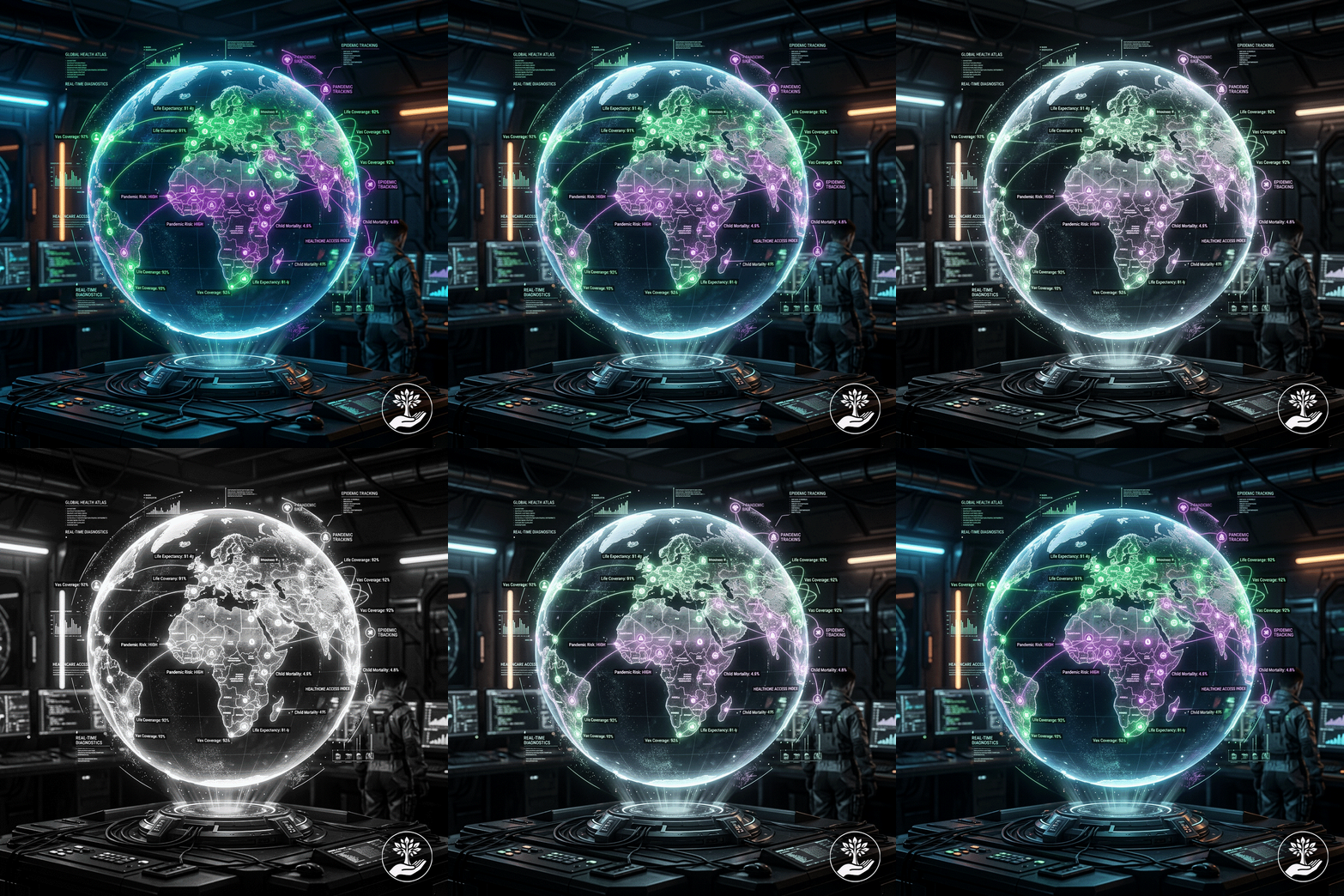
World Health Day 2026 centers on a powerful, unified message: “Together for health. Stand with science.” This year’s theme emphasizes collaboration—between communities, healthcare systems, researchers, and everyday people—to build a healthier, more resilient world. Led by the World Health Organization, the campaign highlights how science-backed decisions, trusted information, and collective action are essential to tackling global health challenges.
In 2026, health isn’t just personal—it’s interconnected. From public health infrastructure to emerging research, from mental wellness to environmental factors, outcomes improve when people align around evidence instead of noise. Standing with science means valuing data, supporting innovation, and making informed choices that benefit not just individuals, but entire communities.
Vibes
Clarity. Trust. Collective strength.
How to Observe
• Prioritize one science-backed health habit today • Verify information before sharing—cut through misinformation • Support public health organizations and research initiatives • Encourage conversations rooted in facts, not fear
Pulse Check
Are your health decisions based on evidence—or convenience?
When knowledge leads, outcomes improve.
Standing with science isn’t passive—it’s a daily choice to move smarter, not louder.
A Note on Medical Cannabis
Medical cannabis sits right at the intersection of culture, policy, and science. As research continues to evolve, evidence supports its role in managing certain conditions—such as chronic pain, epilepsy, and chemotherapy-related symptoms—under proper medical guidance. At the same time, responsible use, regulation, and ongoing study remain essential.
In the context of this year’s theme, medical cannabis represents a broader point: health conversations must stay grounded in research, not stigma or hype. Whether exploring plant-based therapies or advanced pharmaceuticals, the goal stays the same—safe, effective, evidence-based care that improves quality of life. Standing with science means staying informed, open-minded, and accountable.
Interesting Facts
• World Health Day has been observed annually since 1950
• Each year focuses on a specific global health priority led by the World Health Organization
• Evidence-based health systems consistently produce better long-term outcomes
National Picnic Day is observed on April 23, encouraging everyone to take a meal outside and make “regular” feel premium. It’s the same ingredients, but the environment upgrades the whole experience—fresh air, natural light, and the freedom of unstructured time.
Picnic Day also has cultural range: it can be romantic, family-friendly, friend-group energy, or solo reset with a playlist and a view. The point is to break the indoor loop and remember life isn’t only screens, schedules, and transactions.
Vibes
Soft luxury in real life—sunlight, good food, better mood.
How to Celebrate
• Pack a clean spread and pick a real view
• Keep it simple: fruit, sandwiches, sparkling drinks
• Leave the phone alone for at least 20 minutes
• Invite someone you actually enjoy
Pulse Check
Where do you feel most alive outdoors—beach, park, hills, city rooftop?
Your environment shapes your energy.
Choose your setting like it matters—because it does.
Interesting Facts
• National Picnic Day is observed on April 23
• Picnics became popular as leisure culture expanded in Europe and the U.S. (and evolved into modern park culture)
• Eating outdoors can improve mood simply by changing context and attention patterns
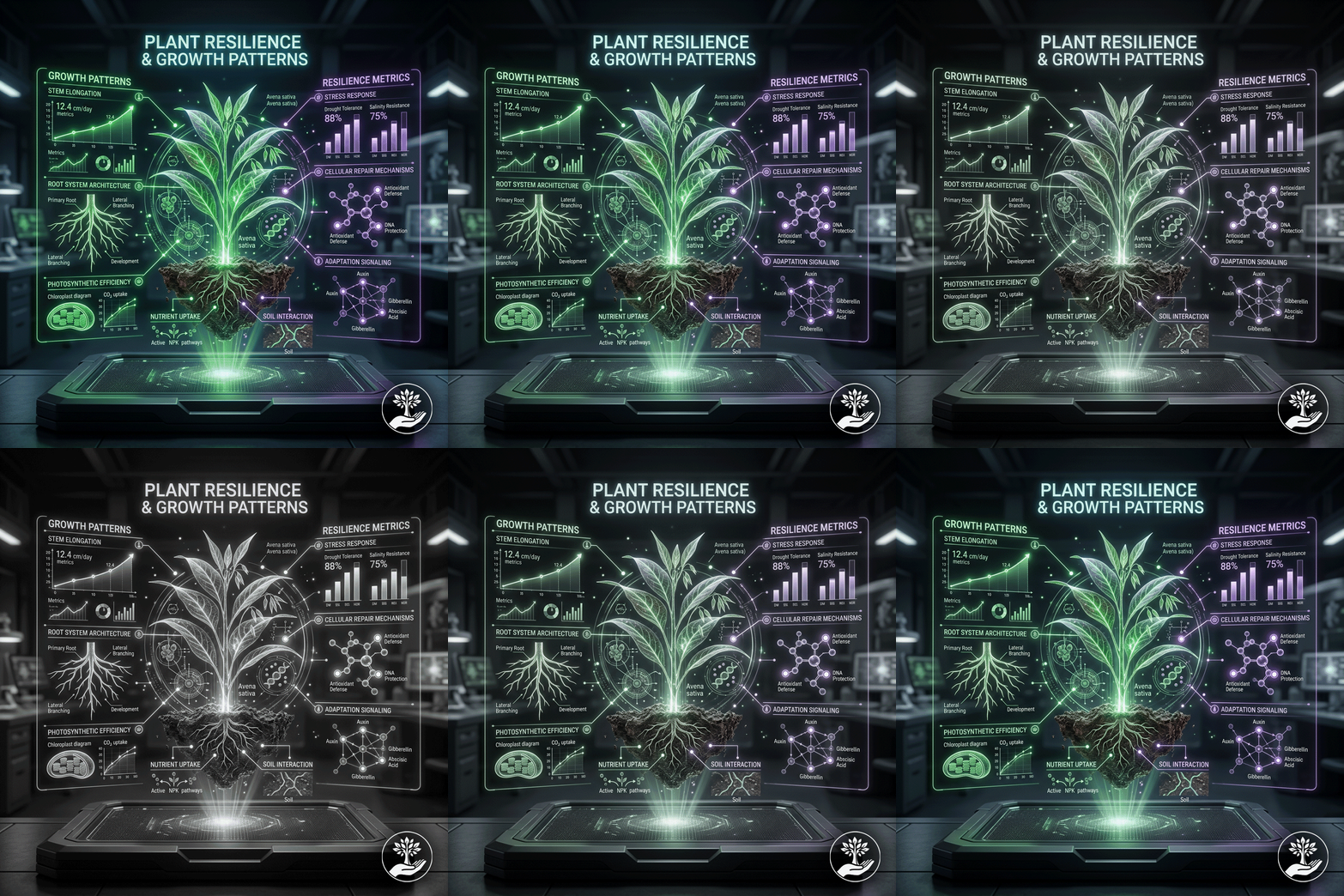
Dandelion Day celebrates a plant known for thriving where others can’t. Often overlooked, the dandelion symbolizes resilience, adaptability, and quiet strength. It grows through cracks, survives harsh conditions, and keeps returning—unbothered.
Beyond nature, the dandelion reflects a mindset: persistence without noise. It’s a reminder that survival doesn’t require permission or praise.
Vibes
Quiet strength. Relentless growth.
How to Celebrate
• Spend time observing nature • Appreciate overlooked resilience • Reflect on personal persistence • Respect natural cycles
Pulse Check
Where have you kept growing despite resistance?
Strength doesn’t always announce itself.
Interesting Facts
• Dandelions are fully edible • They improve soil health • They spread efficiently by design
Walk Around Things Day highlights a simple but often ignored strategy: not every obstacle is meant to be pushed through. Some are better navigated by patience, perspective, and rerouting. The day encourages flexibility over force.
Applied beyond the literal, this concept speaks to life, work, and relationships. Adaptability often wins where brute persistence fails.
Vibes
Calm strategy. Smart movement.
How to Observe
• Choose patience over frustration • Reroute instead of resisting • Apply flexibility to a challenge • Value efficiency over ego
Pulse Check
What obstacle could you move around instead?
Momentum doesn’t always mean collision.
Interesting Facts
• Problem-solving improves with cognitive flexibility • Rerouting reduces stress • Adaptation is a survival advantage
World Party Day encourages collective celebration—not tied to profit, obligation, or hierarchy. It’s about recognizing joy as a unifying force across cultures, cities, and communities. The concept is simple: if people celebrated together more often, connection would replace division.
In practice, this day isn’t about excess—it’s about shared energy. Music, movement, conversation, and presence all count. The real party is participation.
Vibes
Global rhythm. Shared energy.
How to Celebrate
• Host or join a gathering • Play music that moves people • Dance without agenda • Celebrate community
Pulse Check
Who do you celebrate life with?
Joy multiplies when shared.
Interesting Facts
• The idea originated from a call for global celebration • It’s observed in multiple countries • Music is the most common connector
PB&J Day celebrates one of the most recognizable food pairings ever created. Peanut butter and jelly became a staple due to accessibility, balance, and flavor contrast—protein meets sweetness, comfort meets convenience. What started as a practical solution became a cultural constant.
Today, PB&J represents more than a sandwich. It’s nostalgia, reliability, and proof that simplicity, when done right, can last generations without needing reinvention.
Vibes
Comfort classics. No overcomplication.
How to Celebrate
• Make a PB&J with a twist • Share one with someone else • Appreciate low-effort excellence • Revisit childhood comfort foods
Pulse Check
What simple thing still delivers every time?
Sometimes the basics outperform everything flashy.
Interesting Facts
• PB&J became popular in the early 1900s • It’s a balance of protein, carbs, and fats • Variations exist worldwide
The Pink Moon marks April’s full moon and takes its name from early spring wildflowers that bloom across North America—not from the moon’s appearance itself. Traditionally associated with renewal, growth, and seasonal shifts, this lunar moment has long served as a natural checkpoint between winter’s closure and spring’s acceleration.
In modern culture, the Pink Moon has become a pause button. It’s a reminder that cycles matter—rest, growth, release, repeat. While the moon itself keeps perfect time, how we align with it is optional, intentional, and personal. For many, this full moon represents momentum with awareness.
Vibes
Reset energy. Clean transitions. Forward motion.
How to Observe
• Reflect on what’s beginning to grow in your life • Release habits that no longer align • Spend time outdoors after sunset • Set intentions rooted in consistency
Pulse Check
What’s quietly growing in your life right now?
Progress doesn’t always announce itself. Sometimes it shows up gradually, like spring itself.
Interesting Facts
• The Pink Moon often coincides with early spring blooms • It’s one of the earliest full moons of the year • Lunar cycles have guided agriculture for centuries
Joy doesn’t need permission. Sometimes the most serious move is choosing to enjoy the moment.
A Day That Takes Play Seriously
Fun Day exists as a reminder that laughter, creativity, and light-heartedness aren’t distractions—they’re fuel. Observed annually on April 1, this day encourages people to intentionally step away from routine, pressure, and expectations, and instead lean into enjoyment without justification. Whether that looks like games, music, art, or spontaneous adventures, the goal is simple: prioritize enjoyment on purpose.
In a world that glorifies nonstop productivity, Fun Day flips the script. It acknowledges that play sharpens focus, strengthens relationships, and resets perspective. This isn’t about pranks or chaos—it’s about reclaiming joy as a valid, necessary part of a balanced life, especially for creators, builders, and thinkers who run hot year-round.
Vibes
Unapologetic smiles. Loose schedules. Zero overthinking.
How to Celebrate
• Do something purely for enjoyment, not output • Revisit a hobby you dropped because life got “busy” • Laugh loudly, even if nothing’s that funny • Turn off notifications and stay present
Pulse Check
When was the last time you let yourself have fun without explaining why?
Fun doesn’t need a reason, and it definitely doesn’t need approval. Today is about choosing joy as an act of confidence, not escapism.
Interesting Facts
• Play has been linked to improved problem-solving and creativity • Adults who prioritize fun report lower burnout rates • Some of the best ideas emerge during moments of play
In today’s digital world, our lives are increasingly stored on devices, whether it’s photos, important documents, personal information, or work-related files. While technology has made life more convenient, it has also made us more vulnerable to data loss. That’s why World Backup Day, observed every year on March 31, is such an important reminder to back up your data and protect your digital assets.
Why World Backup Day Matters
World Backup Day was created to raise awareness about the importance of backing up your data and to encourage everyone to take simple, proactive steps to protect their files. Data loss can happen unexpectedly—due to system crashes, accidental deletion, theft, natural disasters, or cyberattacks—and the consequences can be devastating.
Imagine losing years of photos, crucial work files, or important documents—especially if they weren’t backed up. The cost of recovery, not to mention the emotional toll, can be immense. That’s why World Backup Day reminds us to make data backup a regular part of our digital routine.
What Are the Risks of Not Backing Up Your Data?
The risks of not backing up your data are real, and they can be severe. Some common causes of data loss include:
1. Hard Drive Failures
Hard drives are mechanical devices, and like all machines, they have a lifespan. Over time, they can fail, and when they do, the data stored on them is often lost. Without a backup, you could lose irreplaceable files.
2. Accidental Deletion
It’s easy to accidentally delete a file or folder that you need. Sometimes, the deletion can be irreversible, especially if you don’t have a backup to recover the lost data.
3. Ransomware and Cyberattacks
Ransomware attacks are on the rise, with cybercriminals demanding payment in exchange for restoring access to your files. Having a backup is one of the best defenses against this kind of attack, as it allows you to restore your files without paying the ransom.
4. Theft or Loss of Devices
Whether it’s a stolen phone, laptop, or external hard drive, losing a device can lead to significant data loss if there’s no backup. Even if you don’t lose your device, data breaches are becoming more frequent, putting sensitive personal information at risk.
5. Natural Disasters
Floods, fires, and other natural disasters can destroy physical devices. Without an offsite or cloud backup, your data could be permanently lost when disaster strikes.
What Are the Best Backup Methods?
Backing up your data doesn’t have to be complicated. There are several reliable methods you can use to ensure your files are safe, and a combination of them is usually best. Here are some of the most common backup options:
1. External Hard Drives
External hard drives are a popular choice for backing up large amounts of data. They are relatively inexpensive and provide a quick and easy way to store copies of important files. You can set up automatic backups on your computer to ensure your data is regularly saved.
However, external drives can fail, so it’s important not to rely solely on them. Always have multiple backups if possible.
2. Cloud Storage
Cloud services like Google Drive, Dropbox, OneDrive, and iCloud allow you to store data online and access it from anywhere. Cloud backups are particularly useful because they are stored offsite, meaning they’re protected from local disasters like fires or floods. Most cloud storage services offer automatic backups, so your files are continuously synced.
While cloud services are convenient, it’s important to review their security protocols to ensure your data is protected.
3. Network-Attached Storage (NAS)
For those with more complex needs, a NAS device is a great option. NAS devices are connected to your home or office network, allowing multiple users to access and back up their data. They offer additional features like remote access, data redundancy, and the ability to store large amounts of data.
4. Automated Backup Solutions
There are several backup software programs that offer automated backups. These solutions can back up files on a schedule you choose, ensuring your data is regularly saved without requiring manual intervention. Some services also offer incremental backups, which only back up new or changed files, saving space and time.
5. Backup Services for Mobile Devices
In addition to backing up your computer, it’s essential to back up your mobile devices. Smartphones and tablets contain tons of important data—photos, contacts, messages, and apps. Most smartphones offer built-in cloud backup options, like Apple’s iCloud or Google’s Android backup service. Make sure to enable these features to ensure your mobile data is always safe.
How to Celebrate World Backup Day
World Backup Day is the perfect occasion to review your data protection strategy and ensure that your files are safe. Here are some ideas on how to get involved and celebrate the day:
1. Back Up Your Data
If you haven’t backed up your data recently, now is the time to do it. Use one or more of the methods listed above to create a copy of your most important files. Make it a habit to back up your data regularly, not just on World Backup Day.
2. Check Your Backup Systems
Take some time to ensure that your backup systems are working properly. Check if your external drives are functioning, verify that your cloud storage is syncing correctly, and confirm that any automated backups are running as scheduled.
3. Spread the Word
Encourage your friends, family, and colleagues to back up their data as well. Share the importance of data backups on social media or in person. Use the hashtag #WorldBackupDay to join the global conversation and raise awareness.
4. Test Your Backups
It’s important to not only back up your data but also test the backups to ensure you can actually recover your files if needed. Try restoring a file from your backup system to verify that the process works smoothly.
Conclusion
World Backup Day serves as a crucial reminder that protecting your digital life is just as important as protecting your physical possessions. Data loss can happen at any time, but with a little preparation, you can avoid the devastating consequences of losing important files. Whether it’s through external hard drives, cloud storage, or automated backup solutions, taking the time to back up your data today can save you time, stress, and potentially significant losses down the road.
Make World Backup Day the day you commit to safeguarding your digital life. Remember: backing up your data is the best insurance you can have for peace of mind in an increasingly digital world.
Doctors operate where knowledge meets consequence. Every decision carries weight, every action demands accuracy, and every moment requires calm under pressure. Doctors Day recognizes the discipline, training, and responsibility that comes with protecting human life at scale.
This isn’t hero worship. It’s respect for mastery earned through repetition, restraint, and accountability. Medicine isn’t instinct—it’s earned judgment.